Mildiu polvoroso y manchas foliares de la avellana (Erysiphe corylacearum)
Contenido generado por inteligencia artificial — verifique antes de aplicar
Este artículo ha sido compilado automáticamente a partir de una colección de literatura sobre avellanas mediante inteligencia artificial y puede contener errores o datos desactualizados. Sirve como punto de partida para investigaciones adicionales, no como asesoramiento técnico profesional. Las dosis, productos y plazos son informativos y dependen de la variedad, la ubicación y la normativa vigente; consulte obligatoriamente con el servicio de asesoramiento agronómico y en las fuentes oficiales antes de aplicar cualquier tratamiento.
Las enfermedades foliares de la avellana (Corylus avellana) a menudo se subestiman porque rara vez destruyen directamente la nuez como lo hace el picudo de la avellana o la podredumbre del endocarpio. Sin embargo, la hoja es la "fábrica" del arbusto: cualquier pérdida prematura de masa foliar reduce la fotosíntesis, agota el arbusto, debilita el crecimiento de la madera fructífera y disminuye la productividad del año siguiente. En la avellana aparecen dos grupos de enfermedades fúngicas de las hojas: los mildius polvorosos (inglés powdery mildew) y las manchas foliares (inglés leaf spot, anthracnose). Durante mucho tiempo, el único mildio polvoroso de la avellana fue el causado por Phyllactinia guttata (sin. P. corylea), una enfermedad que "por regla general no se controla". Sin embargo, en los últimos años, se está extendiendo por Europa un nuevo mildio polvoroso más agresivo causado por la especie asiática Erysiphe corylacearum, el cual puede reducir significativamente el rendimiento y la calidad. Este artículo explica cómo reconocer estas enfermedades, cómo se propagan y qué medidas de protección —agrotécnicas y fungicidas— tienen sentido en las condiciones croatas.
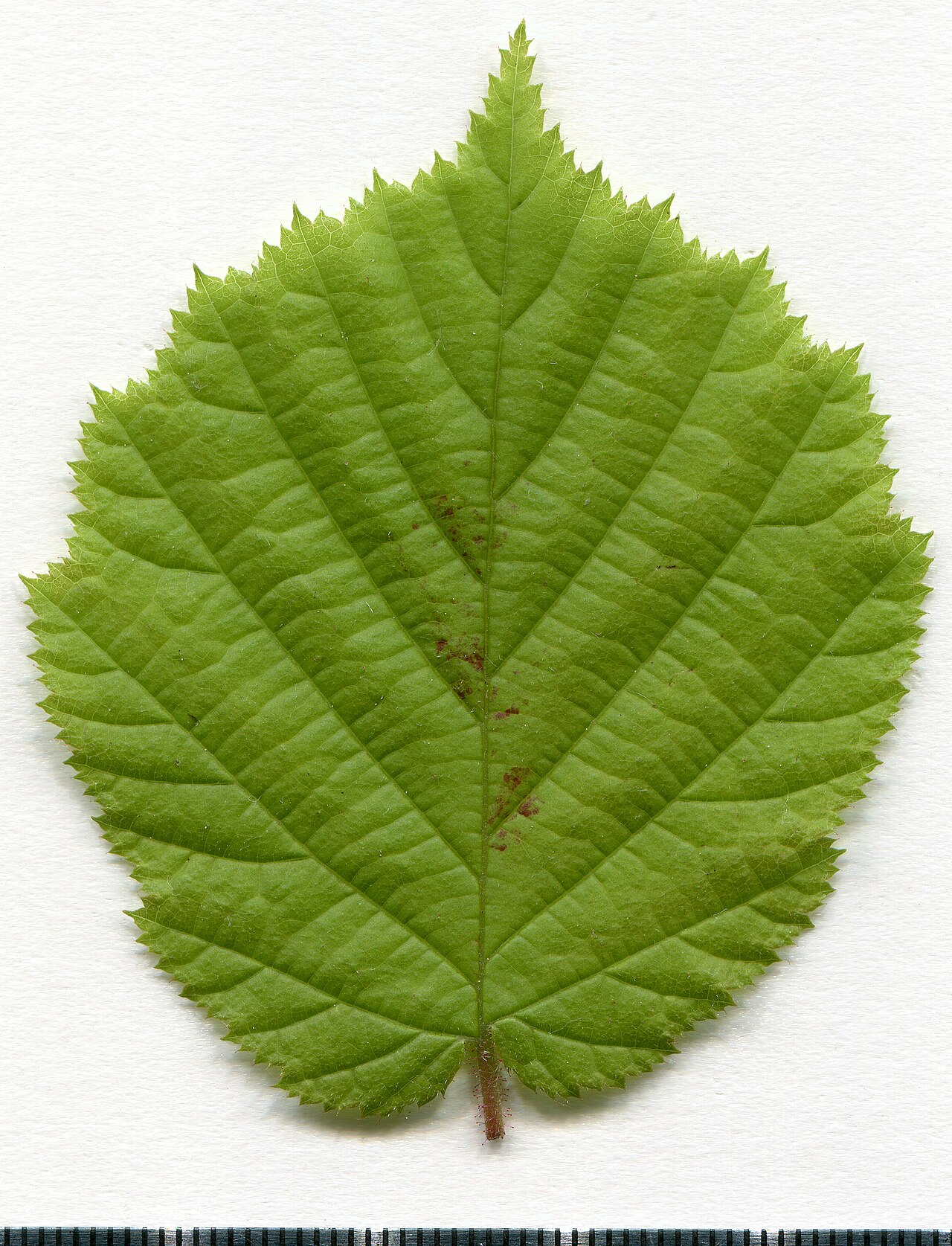
Resumen rápido: tres enfermedades foliares
| Enfermedad | Agente causal | Síntoma principal | Momento de aparición | Importancia económica |
|---|---|---|---|---|
| Mildio polvoroso clásico | Phyllactinia guttata (sin. Phyllactinia corylea) | capa blanquecina en el envés de la hoja, manchas amarillas en el haz | agosto–octubre | generalmente bajo; mayor en plantaciones fertilizadas y húmedas |
| Nuevo mildio polvoroso (asiático) | Erysiphe corylacearum | manchas blancas pulverulentas en el haz de la hoja y en las brácteas de la nuez | desde el verano en adelante | alto — puede reducir el rendimiento y la calidad |
| Mancha foliar / secado de yemas | Gloeosporium coryli (sin. Labrella coryli), y otros hongos | manchas redondeadas de hasta 2 cm con zona anular, defoliación | julio–otoño, tras períodos lluviosos | moderado; intenso en años húmedos |
Regla para el campo
Observe en qué lado de la hoja está la capa. Una cubierta blanquecina predominantemente en el envés (cara inferior) indica el mildio polvoroso clásico Phyllactinia. Las manchas blancas pulverulentas evidentes en el haz (cara superior), junto con un coloración bronce-púrpura y el ataque a las brácteas de la nuez, son sospechosas del nuevo Erysiphe corylacearum. Las manchas marrones redondeadas con un anillo aclarado no son mildio polvoroso, sino mancha foliar.
Mildio polvoroso clásico de la avellana — Phyllactinia guttata
Importancia
Phyllactinia guttata (en literatura antigua Phyllactinia corylea) es tradicionalmente la "enfermedad fúngica más común de la avellana" y, al mismo tiempo, la que menos preocupa. Los daños suelen ser insignificantes cuando la enfermedad aparece tarde en la vegetación. Solo si aparece temprano, o en plantaciones muy fertilizadas y húmedas, la pérdida de hojas puede justificar el costo de la protección. El mildio polvoroso es más común en el clima mediterráneo que en el continental.
Síntomas
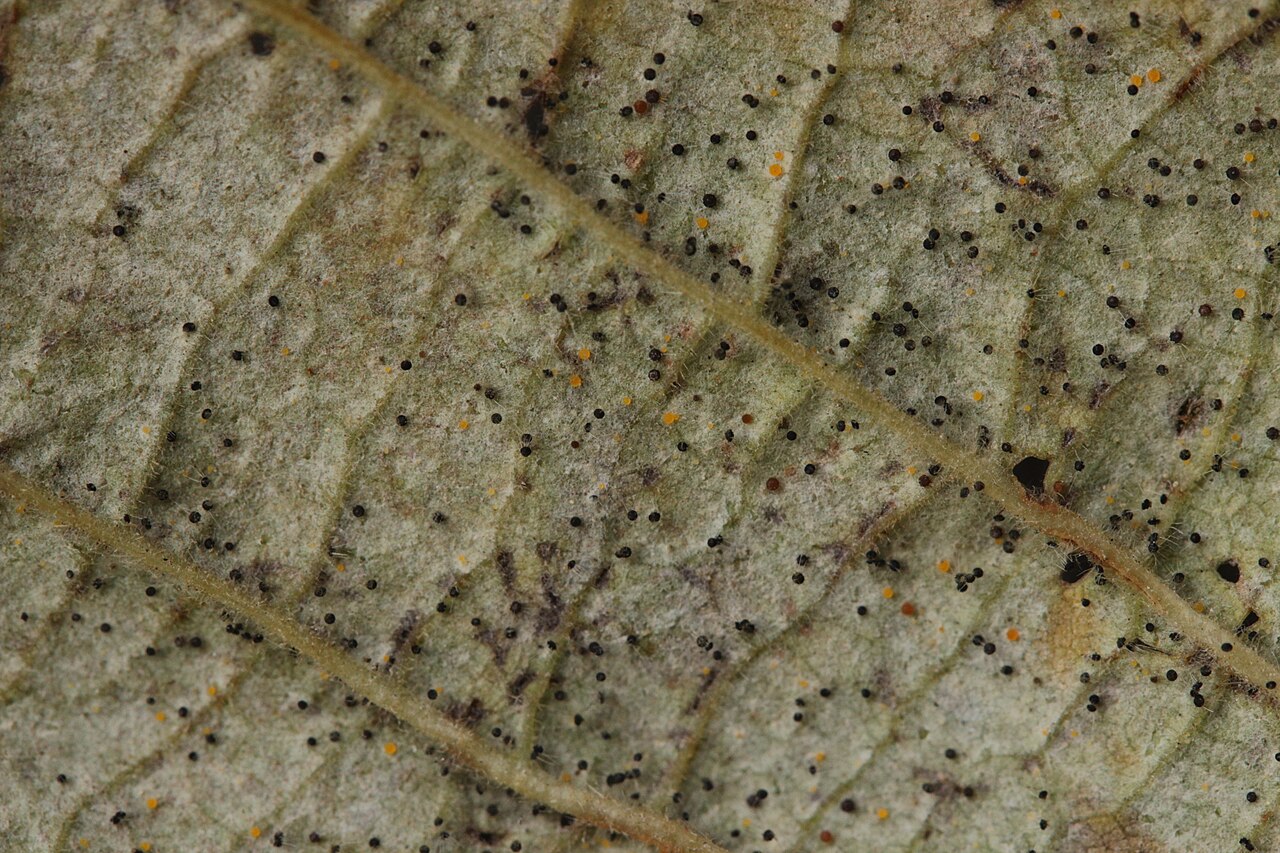
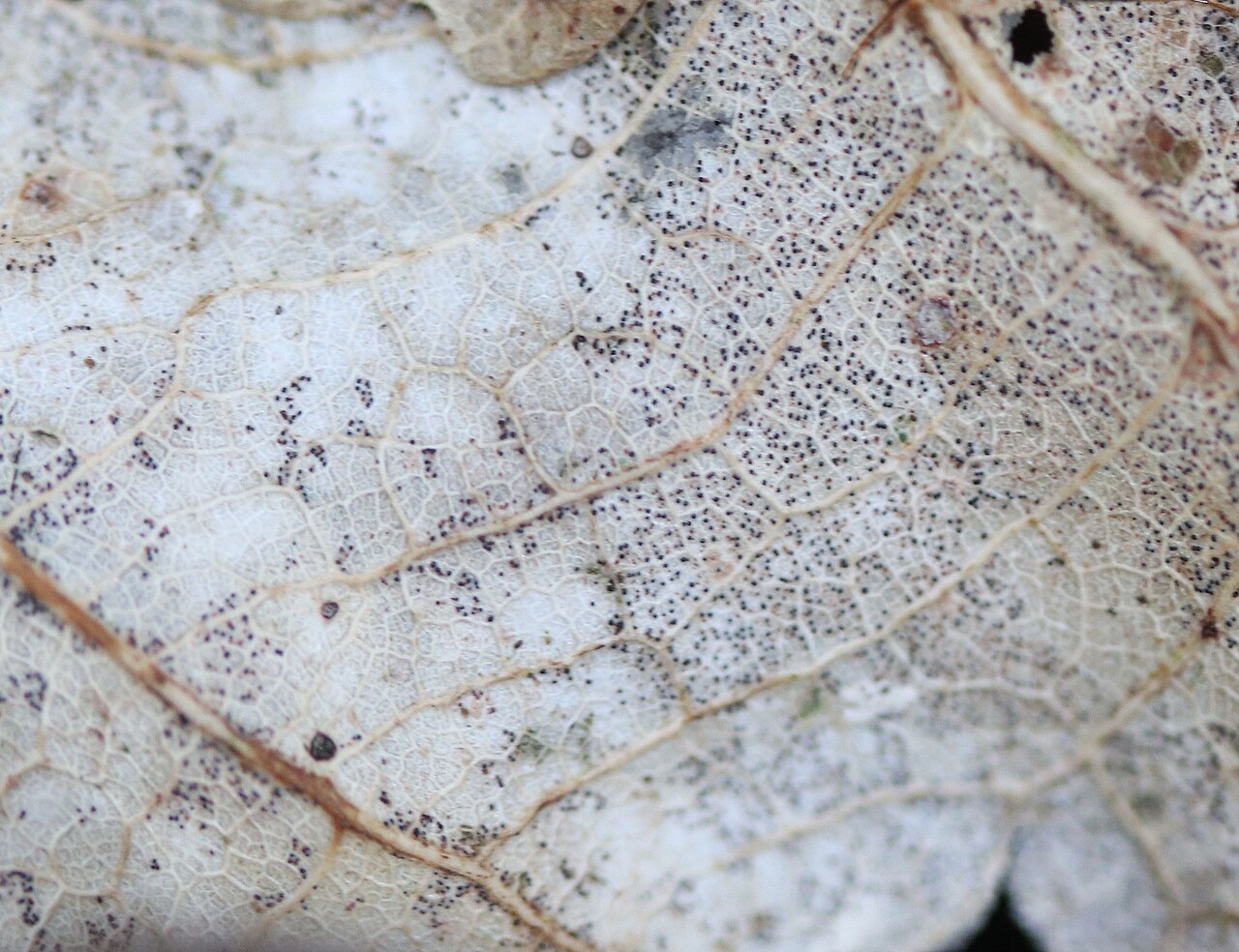
- Envés de la hoja: una ligera capa blanquecina (gris-blanca) formada por micelio y conidias (oidios). Al principio, la capa está poco desarrollada y apenas es visible, pero luego se extiende, se densifica y puede cubrir todo el envés.
- Haz de la hoja: zonas blanco sucio y manchas blanquecinas; el tejido en estos puntos puede necrosarse.
- Evolución: durante septiembre, el envés se vuelve amarillo, luego se oscurece y la hoja cae. Una defoliación fuerte agota el arbusto y reduce el crecimiento y la productividad del año siguiente.
Diseminación
- Los síntomas aparecen con mayor frecuencia desde mediados de agosto hasta octubre; antes en años húmedos (humedad relativa del 70–80 %).
- Favorece la alta humedad relativa del aire y el crecimiento vigoroso y blando —de ahí la relación con la fertilización nitrogenada excesiva.
- El hongo invierna en las hojas caídas y se disemina intensamente desde ellas al año siguiente.
Nuevo mildio polvoroso (asiático) — Erysiphe corylacearum
Por qué es importante
Erysiphe corylacearum es una especie originaria de Asia que se ha extendido a través de Turquía, Georgia e Irán, y en los últimos años se ha registrado por primera vez en varios países europeos —Italia (Piamonte, 2020.–2024.), Hungría, Rumanía y otros. A diferencia del leve mildio polvoroso Phyllactinia, esta especie se describe como una enfermedad emergente y más peligrosa que puede reducir notablemente el rendimiento y la calidad de las avellanas. Por ello, es relevante también para los productores croatas, incluso si en el momento de la redacción aún no ha sido confirmada laboratorialmente en alguna zona; vale la pena seguirla y saber reconocerla.
Estado y normativa
La aparición y el movimiento de E. corylacearum en Europa son monitoreados por los servicios fitosanitarios (por ejemplo, EPPO). Si observa los síntomas descritos a continuación en su plantación —especialmente manchas blancas pulverulentas en el haz de la hoja y en las brácteas de la nuez— se recomienda informar al servicio de asesoramiento/fitosanitario para su confirmación y registro. Verifique la lista de productos registrados y sus aplicaciones permitidas en la base de datos FIS (fis.mps.hr), ya que las registraciones cambian.
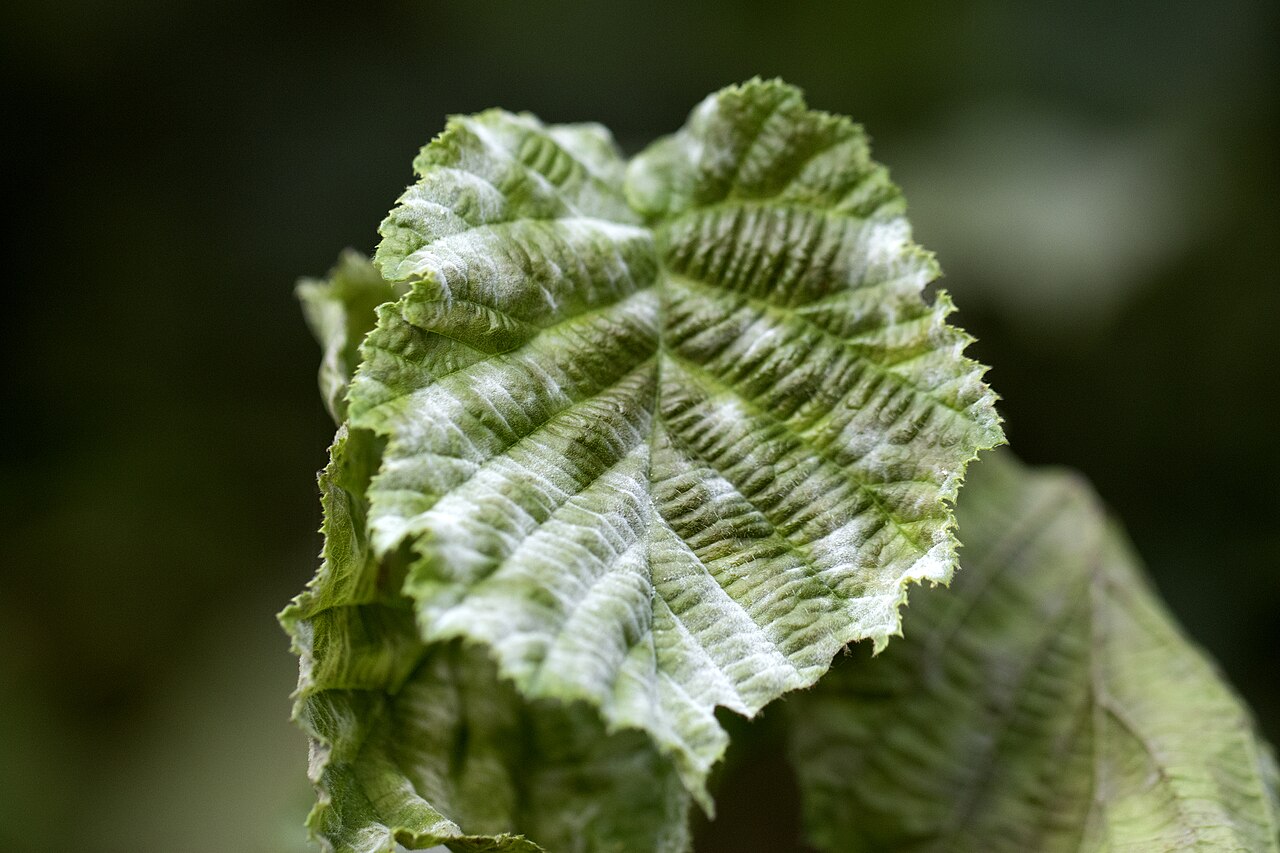
Síntomas (cómo diferenciar de Phyllactinia)
Según investigaciones italianas recientes, los síntomas de E. corylacearum son:
- en el lado superior (haz) de la hoja, manchas blancas y pulverulentas de forma circular de ~0,5–1 cm de diámetro, junto con áreas pálido-amarillentas;
- capa micelial blanca a grisácea también en las brácteas (brácteas) de la nuez;
- en la fase tardía de la infección, las manchas se expanden y se fusionan, y el color de la hoja cambia a púrpura-bronce (purple-bronze).
La diferencia clave: el Phyllactinia clásico produce una capa predominantemente en el envés, mientras que Erysiphe es más evidente en el haz de la hoja y afecta a las brácteas de la nuez, lo cual está más directamente relacionado con la pérdida de rendimiento.
Diseminación
- Como todos los verdaderos mildius polvorosos, se disemina por conidias transportadas por el viento; su desarrollo favorece el tiempo cálido, seco a moderadamente húmedo y una estructura densa y poco ventilada.
- Invierna en restos vegetales infectados y, según las condiciones, en cuerpos fructíferos (cleistotecios/hazmatotecios).
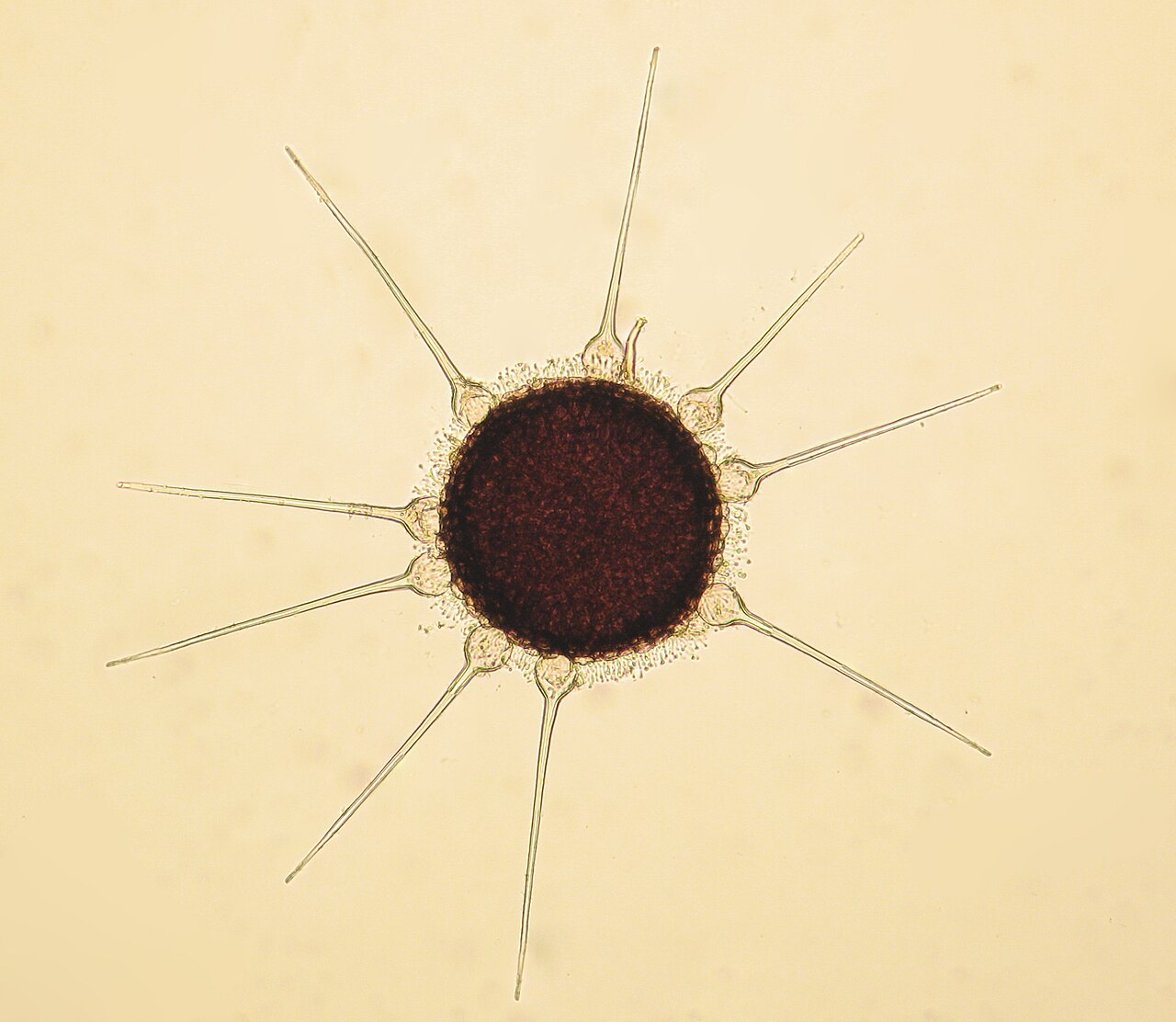
- Un crecimiento vegetativo vigoroso (demasiado nitrógeno), una copa compacta y la proximidad a plantaciones infectadas aumentan el riesgo.
Mancha foliar y secado de yemas — Gloeosporium coryli y otros hongos
Agentes causales
La mancha foliar de la avellana más comúnmente descrita en la literatura local es la mancha foliar y secado de yemas causada por Gloeosporium coryli (Roberge ex Desm.) Sacc., que en algunas fuentes también se registra como Labrella coryli. Bajo el nombre genérico de "manchas" se incluyen una serie de otros hongos (por ejemplo, Cylindrosporium, Phyllosticta/Cylindrosporella coryli, Septoria, Piggotia coryli, Sphaceloma/Elsinoë coryli = antracnosis), que producen todas manchas redondeadas similares. En las plantaciones comerciales, la mayoría son secundarias; la excepción es Sphaceloma coryli, que ha causado graves pérdidas en el sur de Italia.
Síntomas
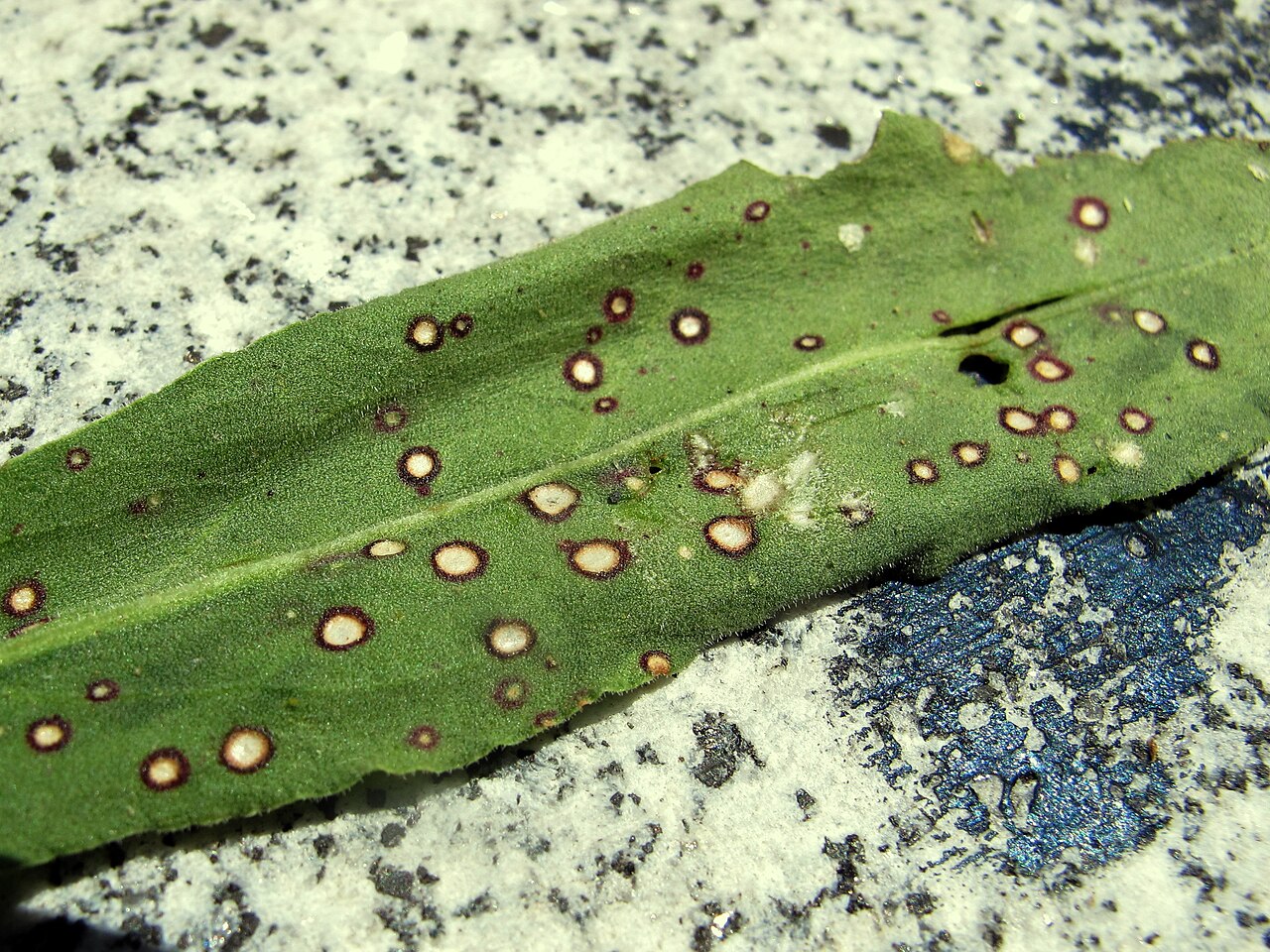
- en las hojas, a finales del verano y principios del otoño (y en años húmedos ya en julio), aparecen manchas redondeadas de hasta ~2 cm de tamaño;
- aspecto característico: zona anular aclarada (más clara) rodeada por un borde más oscuro; a menudo manchas cloróticas;
- las manchas se multiplican, se fusionan y cubren gran parte de la lámina foliar → necrosis del tejido → caída de las hojas (defoliación);
- en las manchas se desarrollan cuerpos fructíferos (acervulos) — pequeños puntos negros visibles a simple vista;
- pueden infectarse también las yemas florales y, con menos frecuencia, los brotes; a principios de primavera, las yemas cambian de color y caen, y de las yemas infectadas pueden desarrollarse brotes raquíticos.
Diseminación
- La enfermedad estalla tras períodos prolongados de frío y lluvia durante la vegetación; cada lluvia subsiguiente favorece la diseminación de la infección.
- Las conidias de los acervulos son dispersadas por la lluvia (chubascos) y los insectos hacia nuevas hojas y yemas.
- El hongo invierna en las hojas caídas y en las yemas infectadas; a principios de primavera se activan las esporas invernales y realizan la infección primaria. El mayor riesgo es en otoño después de la cosecha, cuando ya no se realizan tratamientos de protección.
Atención: no toda mancha es fúngica
Las manchas necróticas de forma irregular en la hoja, la nuez y las ramitas, junto con el secado de los brotes jóvenes y llagas oscuras con exudado bacteriano, indican bacteriosis (Xanthomonas arboricola pv. corylina), y no una mancha foliar fúngica. Consulte el artículo sobre la quemadura bacteriana y la cancro. La diferenciación es importante porque las bacteriosis se controlan de manera diferente (cobre, higiene), y los fungicidas contra la mancha foliar no actúan sobre ellas.
Control of powdery mildew
1. Agronomic and preventive measures (always first)
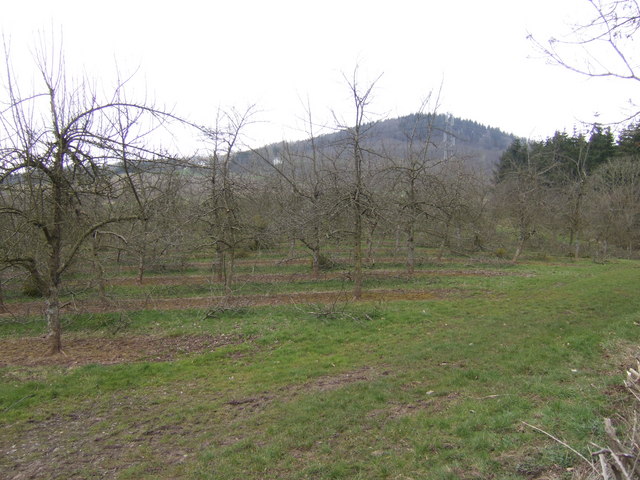
- Sanitation: Collect and remove (plow under or burn) fallen, infected leaves, as the pathogens overwinter in them. This is the most effective measure against both powdery mildews and leaf spots.
- Balanced fertilization: Avoid excessive nitrogen — lush, soft growth favors powdery mildew. Align fertilization with soil and leaf analysis.
- Crown ventilation: Prune to open up the bush/crown so that leaves dry faster (less moisture = less powdery mildew and leaf spots).
- Monitoring: Regular inspection of the plantation, especially near already infected areas; early detection of E. corylacearum.
2. Classic powdery mildew (Phyllactinia)
It is generally not controlled, especially when it appears late in the summer. Intervention is justified only in heavily fertilized plantations and during humid, hot summers, when there is a threat of reduced growth of fruiting wood.
Caution with sulfur on hazelnut
Sulfur fungicides can be phytotoxic to hazelnut leaves (leaf burn). Therefore, they should be applied at concentrations significantly lower than those recommended for other crops and in multiple smaller doses, rather than in a single full dose. Avoid application during heat and strong sunlight.
3. New powdery mildew (Erysiphe corylacearum)
Experience is still developing, but scientific literature and field data indicate:
- Prevention with sulfur and the described agronomic measures (removal of infected residues, balanced fertilization and irrigation, ventilation) form the basis.
- Curative options are limited. In trials, systemic fungicides from typical "powdery mildew" groups — triazoles/DMI (e.g., difenoconazole) and strobilurins/QoI (e.g., azoxystrobin) were effective; the combination of azoxystrobin + difenoconazole showed in one Italian trial ~92 % efficacy on leaves and ~74 % on the fruit's bracts. These data refer to specific trials and products and do not automatically mean registration for hazelnut in Croatia.
- Biocontrol agents (e.g., based on Bacillus spp.) and "environmentally acceptable" products are also being researched.
Registration is mandatory
Before any application, check in the FIS database (fis.mps.hr) if the product is registered for hazelnut and for powdery mildew. Many effective products for other crops are not permitted on hazelnut. Follow the label for doses, number of applications, and pre-harvest intervals (PHI).
Approximate doses of sulfur and related products (informational)
The following values come from hazelnut protection literature (mostly ecologically permitted products) and are strictly informational — check current registration and label:
| Product (example) | Purpose | Approximate dose/concentration | Number of applications | PHI |
|---|---|---|---|---|
| Cosavet DF (sulfur) | powdery mildew | 0.2 % (≈200 g / 100 L water) | up to 4× | 5 days |
| Microthiol Special Disperss (sulfur) | powdery mildew, hazelnut erineum mite | 3–5 kg/ha | up to 8× | 5 days |
| Chromosul DF / Chromosul 80 (sulfur) | powdery mildew, hazelnut erineum mite | 3–5 kg/ha (resp. ~0.3 %) | — | OVP* |
* OVP = PHI limited by time of application. Values are informational; the label and FIS database are authoritative.
Killing two birds with one stone
Sulfur fungicides applied against powdery mildew also indirectly affect the hazelnut erineum mite (Phytoptus avellanae) and thrips, for which there are no registered acaricides in our region. Therefore, early spring sulfur treatments (at bud swell, daily temperatures ~15–20 °C) have a double benefit.
Control of leaf spots
Agronomy
- Removal and destruction of fallen leaves (pathogen overwintering) — the single most important measure.
- Pruning of infected shoots and buds; in severe attacks, clean back to healthy wood. For fomesiosis/black spot, literature recommends cutting 5 cm below the lesion on shoots and 10 cm on scaffold branches, before sap flow, with tool disinfection.
- Ventilation and balanced fertilization (as for powdery mildew).
- More resistant/tolerant varieties where available.
Fungicidal control
Leaf spots are controlled preventively during the growing season, during the period when leaf and fruit tissue is sensitive and humid conditions favor infection (approximately late April, May, June, and as needed after rainy periods). In humid years, treatments are repeated at intervals of ~10–13 days, monitoring rainfall.
| Product (example) | Target | Approximate dose/concentration | Number / PHI |
|---|---|---|---|
| Signum DF (boscalid + pyraclostrobin) | gray leaf spot, brown fruit rot | 1 kg/ha | 2× / 28 days |
| Stoper (combined fungicide) | leaf spots, fruit rot | 0.3 % (≈300 ml / 100 L) | according to label |
| Mancozeb | leaf spots, fruit rot | 0.25 % (≈250 g / 100 L) | according to label |
| Combined fungicide (vegetation) | leaf diseases (gray leaf spot) | 0.5–0.6 % (500–600 g / 100 L) | according to label |
| Copper products (e.g., Bordeaux mixture, Champion, Cuprablau-Z, Neoram) | fungal and bacterial diseases, bark canker | e.g., 0.5 %; 2–3 kg/ha; 0.25–0.45 % | 2–3× / 15–21 days |
All values are informational and depend on the product, variety, location, and registration.
Synergy with other treatments
May/June treatments against leaf spots and fruit rot often overlap in time with key protections against hazelnut weevil and stink bugs. Combined fungicides (e.g., Signum) and copper can be coordinated with insecticide treatments, reducing the number of passes through the plantation. Always check compatibility (tank mix) and PHI of all products in the tank.
Approximate leaf protection calendar
| Phenophase / period | Target | Typical measure |
|---|---|---|
| Dormancy / winter pruning | sanitation, reduce inoculum | removal of fallen leaves, pruning of infected branches, pruning wound disinfection |
| Bud swell (T ~15–20 °C) | hazelnut erineum mite, early protection | sulfur fungicide (also indirectly against mite) |
| Late April – June | leaf spots, fruit rot | preventive fungicide (e.g., Signum/Stoper/Mancozeb), repeat as needed for humidity |
| Summer (hot, humid) | powdery mildews | sulfur at reduced concentrations, multiple applications; monitoring E. corylacearum |
| Post-harvest / autumn | leaf spots, overwintering inoculum | leaf removal, copper application after leaf drop |
Practical recommendations and common mistakes
- Do not confuse diseases. Powdery coating = powdery mildew; round spots with a ring = leaf spots; irregular necroses with exudate and branch drying = bacteriosis. Incorrect diagnosis means incorrect (and useless) product.
- Do not overdo nitrogen. Excessive nitrogen fertilization is "fertilizer" for powdery mildew — lush, soft leaves are more susceptible.
- Sulfur on hazelnut — be careful. Lower concentrations, more frequent applications, not during heat. Otherwise, leaf burn is threatened, which looks like "the medicine is worse than the disease".
- Do not forget autumn. Most of the inoculum for leaf spots and powdery mildew overwinters in fallen leaves; those who remove them start the next year with lower disease pressure.
- Monitor the new powdery mildew. E. corylacearum is spreading across Europe; early recognition (white spots on the upper leaf surface and on the fruit's bracts, bronzing) and reporting to authorities are key for timely response.
- Check registration (FIS). Many "logical" fungicide choices are not permitted on hazelnut. The product, dose, number of applications, and PHI are determined by the label and FIS database, not by literature.
Gallery
Sources
This article is an AI summary compiled from an internal collection of hazelnut literature (RAG corpus) supplemented by public web sources. The content is a verifiable starting point, not an official recommendation; doses and products must be aligned with current registration (FIS) and advisory services.
Main sources used from the corpus:
- Diseases and pests of hazelnut — Repository (PDF, 2020.) — description of powdery mildew (Phyllactinia guttata), leaf spots, and an orientation protection plan.
- Leaf spot and drying of hazelnut buds (Gloeosporium coryli) — Master's thesis, Josip Juraj Strossmayer University of Osijek (2021.).
- Hazelnut protection in organic farming (2026.) — table of permitted sulfur and copper products (Cosavet, Chromosul, Microthiol, Bordeaux mixture, Neoram, Champion, Cuprablau-Z) with doses and PHIs.
- Annual hazelnut treatment plan — Gospodarski list (2026.) — Signum DF (gray leaf spot), sulfur against powdery mildew, ecological products.
- Protect your hazelnut plantations after heavy rains — Chromos Agro (2025.) — leaf spot and bud drying (Labrella/Gloeosporium coryli), Chromosul 80, Fond 12 E.
- Control of harmful organisms in hazelnut plantations / HAZELNUT PROTECTION (2009./2012.) — note on sulfur phytotoxicity and powdery mildew control.
- Notice to hazelnut producers / Notice to market hazelnut producers — Ministry of Agriculture — Signum for gray leaf spot, sulfur and monitoring.
- Economic analysis of hazelnut production (2023) and HAZELNUT — from planting to harvest — link between powdery mildew and nitrogen fertilization and moisture.
Main public (web) sources:
- Matić et al. (2024.) Powdery mildew caused by Erysiphe corylacearum: An emerging problem on hazelnut in Italy, PLOS ONE — https://journals.plos.org/plosone/article?id=10.1371/journal.pone.0301941 (and PMC: https://pmc.ncbi.nlm.nih.gov/articles/PMC11132447/)
- EPPO Reporting Service — Erysiphe corylacearum, an emerging pathogen of hazelnut — https://gd.eppo.int/reporting/article-6981
- PNW Pest Management Handbooks — Hazelnut (Corylus avellana) — Powdery Mildew — https://pnwhandbooks.org/plantdisease/host-disease/hazelnut-corylus-avellana-powdery-mildew
- PNW Pest Management Handbooks — Hazelnut (Corylus avellana) — Leaf Spots — https://pnwhandbooks.org/plantdisease/host-disease/hazelnut-corylus-avellana-leaf-spots
- APS — Diseases of European Hazelnut — https://www.apsnet.org/edcenter/resources/commonnames/Pages/Hazelnut.aspx
- Sphaceloma coryli: A Reemerging Pathogen Causing Heavy Losses on Hazelnut in Southern Italy, Plant Disease — https://apsjournals.apsnet.org/doi/10.1094/PDIS-06-15-0664-RE
- FIS — Phytosanitary Information System (registered plant protection products in Croatia) — https://fis.mps.hr/