Cost of establishing a hazelnut orchard per hectare: detailed calculation
Borrador basado en investigación (fuentes citadas) — adaptar al contexto local
Artículo adaptado a España, basado en literatura de investigación croata/UE (ver Fuentes). Las cifras provienen de los estudios citados y son indicativas para España: verifica los equivalentes locales con MAPA, comunidades autónomas (p.ej. Cataluña/Tarragona), PAC/FEGA, DO Avellana de Reus.
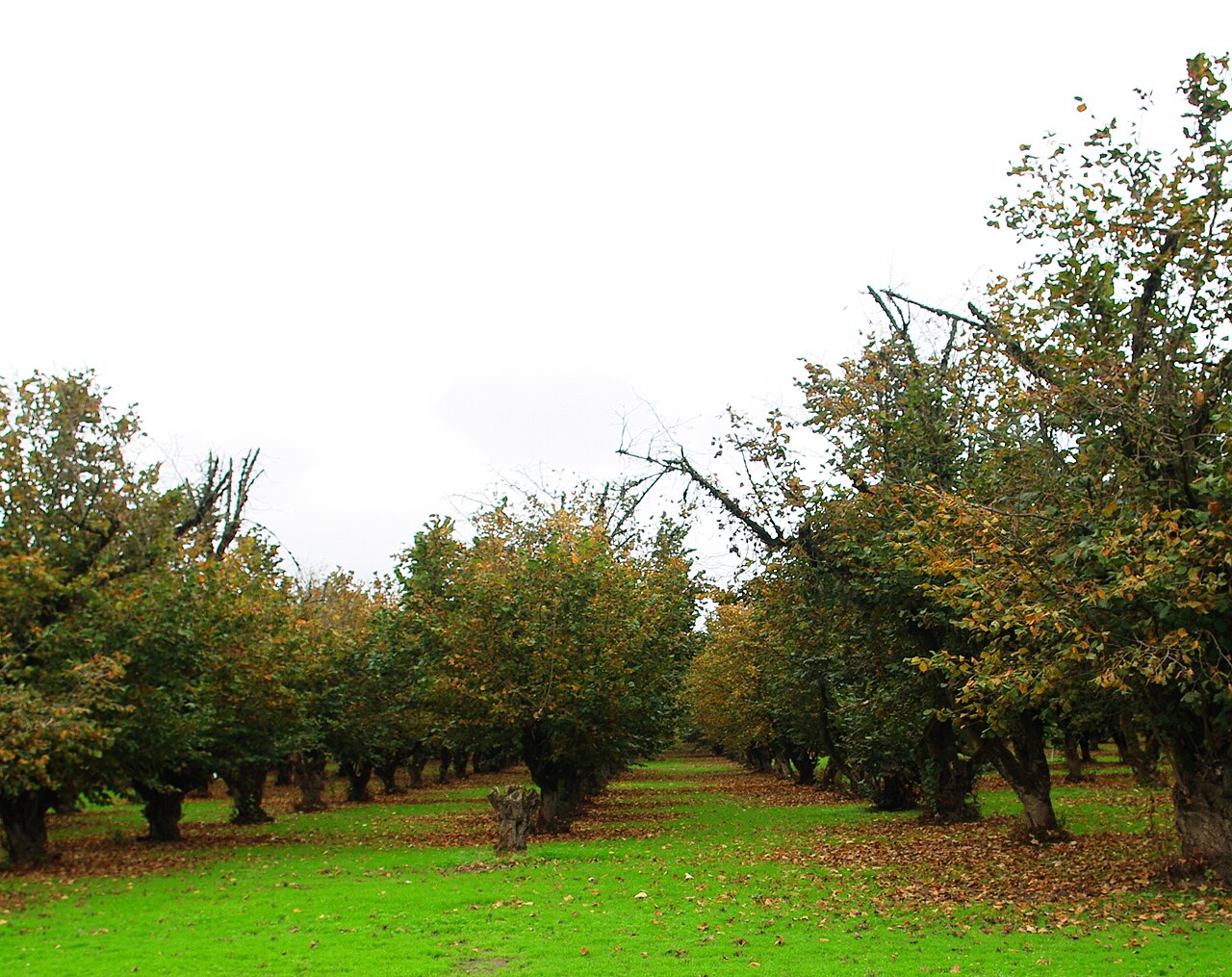
Establishing a hazelnut orchard (Corylus avellana L.) is a capital-intensive, long-term investment. The majority of funds are spent before the orchard even begins to bear fruit: in the so-called zero and first year, when the soil is prepared, seedlings are purchased and planted, fencing is installed, and irrigation systems are built if necessary. Hazelnuts only reach full bearing between the fifth and seventh years, so the producer invests for several years before generating income. This article details all main investment items per hectare — from soil preparation to bearing — based on Croatian/EU economic analyses and business plans, to help you realistically plan your budget.
On currency and price year
The data provided in the sources originates from Croatian research literature, mostly expressed in Croatian Kuna (kn). For the purpose of this article adapted to Spain, we convert these figures into Euros (EUR) using the fixed conversion rate 1 € = 7,53450 kn (used when Croatia adopted the euro). Important: These figures reflect historical costs in Croatia. They should be used as a reference for the structure of costs, not as absolute current prices for Spain. Market prices for seedlings, labor, and materials in Spain may differ significantly. Always verify current local quotes.
How much does establishing 1 ha of orchard cost in total?
Amounts in the literature vary significantly depending on the year of calculation, planting density, farm equipment, and whether irrigation and fencing are included. Several representative figures from Croatian sources (original amounts converted to EUR for comparison):
| Source / Calculation | Scope | Original Amount | ≈ EUR |
|---|---|---|---|
| Total investment to bearing (Continental conditions) | Total investment, 1 ha | ~60.527 kn | ~8.030 € [7] |
| Soil preparation and planting costs | Preparation + planting + fence + seedlings | ~37.905 kn* | ~5.030 € |
| Economic analysis (2022), pre-planting costs | Only pre-sowing operations, 1 ha | ~16.700 kn* | ~2.222 € |
| Modern market estimate (Media) | Seedlings, prep, fence, irrigation | — | ~30.000 €/ha |
Note: The specific breakdown for the 37.905 kn and 16.700 kn figures is derived from typical structures in the sources, though explicit totals for these specific scenarios are not fully detailed in the provided excerpts. The 60.527 kn figure is explicitly stated [7].
The wide range (from a few thousand to 30,000 € per hectare) is not an error, but a reflection of different scopes: some calculations cover only pre-sowing work, others the entire cycle to bearing, and the highest estimates include irrigation and full fencing at today's prices. Treat all amounts as informative and adapt them to your location, variety, and market prices at the time of investment.
An important rule repeated in almost all analyses: the highest costs occur in the zero and first year. In one frequently cited continental calculation:
- Zero year: 21.442 kn/ha (≈ 2.846 €), about 35% of total investment;
- First year: 29.155 kn/ha (≈ 3.869 €), about 48% of total investment;
- Second and third years combined: about 16% of investment.
Thus, about 83% of the entire investment is spent in the first two years (zero + first), before any income from harvest.
Updated investment model for 2025/2026 (indicative, 1 ha)
Since prices for inputs, machinery, and labor have risen significantly since older calculations, we present a conservative model in euros for a classic layout of about 500–600 seedlings/ha. The model combines the structure from Croatian calculations with current market prices; each item is an estimate and requires verification of supplier offers.
| Item | Classic layout (~550 seedlings/ha) | Note |
|---|---|---|
| Soil analysis + sampling | 60–120 € | Mandatory first step |
| Deep plowing / subsoiling | 250–450 € | Tractor work |
| Land leveling (disc harrow, cultivator) | 100–180 € | Preparation of sowing layer |
| Organic fertilization (manure / compost) | 500–900 € | Meliorative |
| Mineral fertilization (NPK) + liming | 350–700 € | According to soil analysis |
| Seedlings (550 units × 4–8 €) | 2.200–4.400 € | Depends on variety and root type |
| Planting, marking, stakes, transport | 350–600 € | Manual labor + material |
| Fencing (mesh + posts + labor) | 2.500–4.500 € | One of the largest items |
| Subtotal (without irrigation) | ~6.300–11.850 € | Classic orchard |
| Drip irrigation system (without water source) | 2.000–4.500 € | Depends on layout |
| Water source (well/reservoir) + pump + automation | 2.000–8.000 € | Highly variable |
| Maintenance yr. 1–3 (cultivation, protection, pruning) | 1.500–3.000 € | Without income |
| Total to bearing, with irrigation | ~12.000–27.000 € | Approaches media estimate of ~30.000 € for intensive orchard |
The lower limit corresponds to a modest, self-operated farm with less dense planting and cheaper seedlings; the upper limit corresponds to a more intensive orchard with denser planting, full irrigation, and paid labor. The largest individual "cost breakers" are planting density (number and price of seedlings) and the decision on irrigation.
Item 1: Soil Preparation
Soil preparation is the foundation of an orchard that remains in production for decades, so it is not worth saving on it. Typical operations and approximate costs (from Croatian calculations, 1 ha; older amounts converted to EUR):
| Operation | Approximate cost (old calculation) | ≈ EUR | Note |
|---|---|---|---|
| Soil sampling and analysis | ~450 kn | ~60 € | Mandatory first step |
| Deep loosening / subsoiling (tractor work) | 1.500 kn | ~199 € | Breaking up compacted layers |
| Land leveling (disc harrow, cultivator) | 650 kn | ~86 € | Preparation of sowing layer |
| Manure (organic) fertilizer | 3.200 kn | ~425 € | Meliorative fertilization |
| Mineral fertilizer (e.g., NPK 7:20:30) | 3.120 kn | ~414 € | According to soil analysis |
| Liming (e.g., 500 kg) | ~330 kn | ~44 € | pH correction |
| Fertilizer distribution (tractor/manual labor) | 1.250–1.400 kn | ~166–186 € | Loading, unloading, distribution |
In one newer calculation (2023), total pre-sowing costs (analysis, fertilization, liming, loosening, leveling, transport) amount to about 2.222 € per hectare. In the structure of the zero year, mineral and organic fertilizers often account for up to 60% of costs that year — this is one of the largest individual items in the entire investment. Keep in mind that mineral fertilizer prices have risen significantly since 2021/2022, so real amounts today are generally higher.
Practical note
Fertilizer doses, lime quantities for liming, and the need for meliorative measures strictly depend on the soil analysis result. The figures given are illustrative; align your fertilization with recommendations based on analysis and current regulations (especially in organic production).
Item 2: Seedlings
Seedlings, along with fertilization and fencing, are one of the three largest items. The cost depends on three key factors: planting density, price per seedling, and type of seedling.
Planting Density
| Cultivation System | Spacing | Seedlings/ha |
|---|---|---|
| Conventional (tree/bush) | 5 × 4 m | ~500 |
| Denser layout | e.g., 4–5 m × 2.5–3 m | ~800 |
| "Living fence" | 5–6 m between rows, 2–2.5 m in row | 1.400–2.000 |
| Intensive / Moulis system | Dense layout | 2.000–6.600 (most commonly ~4.800–5.000) |
Higher density means higher initial cost for seedlings, but also earlier and higher yield per hectare. A Slavic example illustrates this well: switching from 500 to 800 seedlings/ha, the same producer shortened the expected payback period from 9 to 7 years. Make your decision based on variety, mechanization, and cultivation form.
Seedling Price and Total Cost
The price of a seedling depends on age, root type, variety, and whether it is from organic cultivation. Older Croatian prices (converted to EUR):
- Seedlings on own root: on average around 25 kn with VAT ≈ 3.3 € [2];
- Grafted seedlings: up to 50 kn with VAT ≈ 6.6 € [2];
- In some older purchases, a lower price was also quoted (e.g., 17 kn ≈ 2.3 €).
Current seedling prices are higher
Older prices (3–7 €) should be taken only as a historical reference. In 2025/2026, quality certified seedlings of known varieties in nurseries realistically cost around 4–10 € per unit, depending on variety, age, and root type, and scarce and organic seedlings can be even more expensive. For budgeting, it is safer to calculate with the upper limit and request multiple offers.
Examples of total seedling cost per hectare (combination of older sources and updated model):
| Density | Price/unit | Total seedlings/ha |
|---|---|---|
| 800 seedlings | ~22 kn (~2.9 €) | ~17.600 kn (~2.336 €, Mislavac location) |
| ~530 seedlings | 17 kn (~2.3 €) | ~10.200 kn (~1.354 €, OPG Balog) |
| ~550 seedlings (2025/26 model) | 4–8 € | ~2.200–4.400 € |
| 800 seedlings (2025/26 model) | 4–8 € | ~3.200–6.400 € |
Along with seedlings come associated costs: transport of seedlings to the plot, marking of planting sites (about 1.200 kn ≈ 159 €), stakes for marking (~175 kn ≈ 23 €) and planting itself (about 1.600 kn ≈ 212 € manual labor).
Choice of varieties and pollinators
Hazelnut is self-sterile and wind-pollinated, so at least three mutually compatible varieties (main variety + pollinators) are planted in the orchard. The highest quality varieties (e.g., Roman, Istrian elongated) have a yield of 43–50% and stable yield (average around 2.500 kg/ha). Incorrect choice of pollinators can permanently reduce the bearing capacity of the entire orchard — this is a "hidden" item that is not visible in the budget, but crucially affects the return on investment.
Item 3: Irrigation System
Irrigation is not specifically shown in all Croatian calculations (many older analyses omit it), but in modern, intensive orchards it is increasingly considered mandatory, especially in drier and continental areas and for early and stable bearing. Modern market estimates that quote an investment of around 30.000 €/ha include the irrigation system as a separate, significant item. The latest season confirms this further: in the dry 2025 year, Croatian hazelnut production locally dropped by up to 50% due to drought and spring frost — which is exactly the risk that irrigation (with proper location choice) partially mitigates.
The typical choice for hazelnut is a drip system along the rows. The estimate should include:
- Water source (well, reservoir, connection) and possible permit/concession for water;
- Pump and filtration (main unit);
- Main and distribution pipes and drip lines along rows;
- Automation (valves, controller) and, if desired, fertigation (adding fertilizer through water).
Indicative cost range in 2025/2026 (informative):
| Component | Approximate cost/ha |
|---|---|
| Drip lines + distribution pipes + joint material | 1.200–2.500 € |
| Pump, filtration, main unit | 800–2.500 € |
| Automation (valves, controller, sensors) | 300–1.500 € |
| Water source (well / reservoir / connection) | 1.000–8.000 € (highly variable) |
| Total drip system (without/with water source) | ~2.300–14.500 € |
International calculations show how irrigation and mulching increase costs: in a British enterprise budget, basic orchard establishment costs around £7.410/ha, but with mulch and drip lines it rises to around £12.775/ha — so the addition for irrigation and mulch can be on the order of several thousand euros per hectare.
Note
The specific cost of irrigation depends extremely on the distance and yield of the water source, terrain configuration, and level of automation. Before investing, request a quote for your plot layout and check water law conditions with the competent authorities.
Item 4: Fencing
Fencing is in Croatian analyses one of the largest individual items — in some calculations it accounts for about 21% of the total investment cost. The reason is twofold: fencing protects young orchards from wildlife (deer, wild boar, hares) that can destroy seedlings, and material and labor are expensive.
Typical fencing components per hectare (from calculation for Mislavac location; older amounts converted to EUR):
| Item | Approximate cost (old calculation) | ≈ EUR |
|---|---|---|
| Wire mesh for fencing | 3.750 kn | ~498 € |
| Fencing posts | 3.260 kn | ~433 € |
| Fencing installation (manual labor) | 2.970 kn | ~394 € |
| Total fencing (indicative) | ~9.980 kn/ha | ~1.325 € |
The old price of ~1.325 € is unrealistically low today; in 2025/2026, the real cost of fencing (mesh, posts, labor) for 1 ha is more often in the range of 2.500–4.500 €, depending on the quality of the mesh and height of the fence. The cost of fencing per hectare decreases with the size of the plot (since perimeter grows slower than area), so fencing is relatively more expensive on smaller and irregular plots. On large, regular areas, the share of fencing in the total investment is smaller.
Item 5: Labor and maintenance until bearing (years 1–3)
After planting, years of investment without income from harvest follow. Maintenance costs are significantly lower than initial ones, but they accumulate. Example structure of costs second and third year (continental region, 1 ha; older amounts):
| Operation | 2nd year (kn) | 3rd year (kn) | ≈ EUR (2nd + 3rd yr.) |
|---|---|---|---|
| Inter-row cultivation | 1.400 | 1.400 | ~372 € |
| Grassing of orchard | 1.550 | — | ~206 € |
| Hoeing (around seedlings) | 1.000 | 1.250 | ~299 € |
| Plant protection products | 350 | 550 | ~119 € |
| Spraying / spreading | 550 | 450 | ~133 € |
| Pruning | 500 | 280 | ~104 € |
| Seedlings for replanting + transport | 650 | — | ~86 € |
| Total per year | ~6.000 | ~3.930 | ~1.318 € |
The second and third years together account for about 16% of the total investment — predominantly maintenance (soil cultivation, hoeing, protection, pruning for forming the cultivation shape). On family farms, part of this work is often done by family members, so it is not paid "out of pocket", but it should still be valued in a fair calculation.
Sensitivity scenario: planting density and irrigation
Two decisions most strongly change the total investment: how densely you plant and whether you build irrigation. The following matrix gives an indicative range of total investment to bearing (1 ha, 2025/2026, informative; seedlings calculated at ~6 €/unit, other items from updated model):
| Density | Without irrigation | With irrigation (drip + modest water source) |
|---|---|---|
| ~500 seedlings/ha (classic, 5×4 m) | ~7.000–11.000 € | ~10.000–18.000 € |
| ~800 seedlings/ha (denser layout) | ~8.500–13.000 € | ~12.000–21.000 € |
| ~1.500 seedlings/ha (living fence) | ~12.000–18.000 € | ~16.000–27.000 € |
| ~4.800 seedlings/ha (intensive / Moulis) | ~22.000–35.000 € | ~28.000–45.000 €+ |
How to read the matrix:
- Switching from 500 to 800 seedlings/ha increases investment by roughly 1.500–2.500 €, but in practice shortens payback by ~2 years and increases early yield.
- Irrigation adds on the order of 3.000–8.000 € per hectare, but reduces the risk of dry and frosty years and stabilizes yield — which is increasingly important in light of more frequent droughts and extreme weather conditions.
- Intensive systems (Moulis) are the most expensive per hectare and require regular pruning and stronger mechanization, so they are suitable for more experienced, capital-strong investors.
Matrix is a rough estimate
The figures in the matrix are the sum of informative ranges from this article and do not replace actual offers. Prices for seedlings, fencing, and irrigation equipment change from year to year and depend on supplier, location, and exchange rate. Before deciding, prepare your own calculation with collected offers.
Summarized investment by phases (indicative model, 1 ha)
The following table combines the mentioned sources into an illustrative overview "from zero to bearing". The figures are rounded and informative (older amounts converted to EUR, updated to 2025/2026).
| Phase / Item | Indicative cost (range) | Share |
|---|---|---|
| Soil preparation (analysis, loosening, fertilization, liming) | ~1.300–2.500 € | High due to fertilizers |
| Seedlings + planting + marking | ~2.500–7.000 € | ~15–25% of investment |
| Fencing | ~1.500–4.500 € | ~20% of investment |
| Irrigation (if built) | ~2.300–14.500 € (highly variable) | Separate project |
| Maintenance 1st–3rd year (cultivation, protection, pruning) | ~1.500–3.000 € | ~16% of investment |
| Total to bearing (without/with irrigation) | ~8.000 € (classic, without irrigation) to ~30.000 € (intensive with irrigation) | 100% |
Subsidies and funding sources
You do not have to finance the investment exclusively with your own funds. The most important change compared to older sources: old programs (and amounts in Kuna) are no longer valid — the Strategic Plan of the CAP of the Republic of Croatia 2023–2027 is in force.
Strategic Plan of the CAP 2023–2027 (current framework)
Establishment of perennial crops (including hazelnuts) is financed primarily through Intervention 73.10 — Support for investments in primary agricultural production (successor to the former measure 4.1.1.). Key features (check current call as conditions change):
- Eligible costs include restructuring of existing and/or establishment of new perennial crops, irrigation systems, mechanization, buildings, climate change adaptation systems, and general costs (project documentation, consultations).
- Support amount ranges from 15.000 € to 2.000.000 € per project (lower limit means very small investments are not eligible alone).
- Support intensity is generally around 45% of eligible costs for small and medium farms, with possible increases for certain criteria (e.g., for female farm holders); for larger farms, intensity is lower. Rules on increases for young farmers and upper limits have changed through amendments to regulations — mandatory check the valid version.
In addition, hazelnut as a permanent crop can also achieve direct payments and RDP measures (annual, per hectare), according to the Regulation on the implementation of direct support to agriculture for the current year. Young farmers have a special support package available (support for starting a business, higher intensity of investment).
What do older sources say (historical only)
- Old support for establishing 1 ha of hazelnut orchard: around 16.800 kn/ha (≈ 2.230 €), or 22.700 kn/ha (≈ 3.013 €) in areas with more difficult management conditions — these amounts are no longer valid [3].
- In some old examples, the subsidy covered almost the entire cost of pre-sowing work (e.g., subsidy ~2.229 € vs cost ~2.222 €), and in the first year subsidies covered about 82.6% of incurred costs — these are historical data from the time of the Kuna [5].
Loans and mixed financing
- In business plans, a common model is 50% own and 50% borrowed funds (e.g., HAMAG-BICRO microfinancing, HBOR credit lines), with more favorable conditions for organic production [1].
- Along with state subsidies, there are often county, city, and municipal subsidies in the area where the orchard is established — it is worth checking local calls.
Subsidies change
Amounts and intensities of subsidies change with almost every new call and amendment to regulations. Before planning an investment, mandatory check valid interventions of the Strategic Plan of the CAP 2023–2027, direct payments, and national measures and eligibility conditions with the advisory service and the Agency for Payment in Agriculture, Fisheries and Rural Development (APPRRR).
Hazelnut purchase price: current range
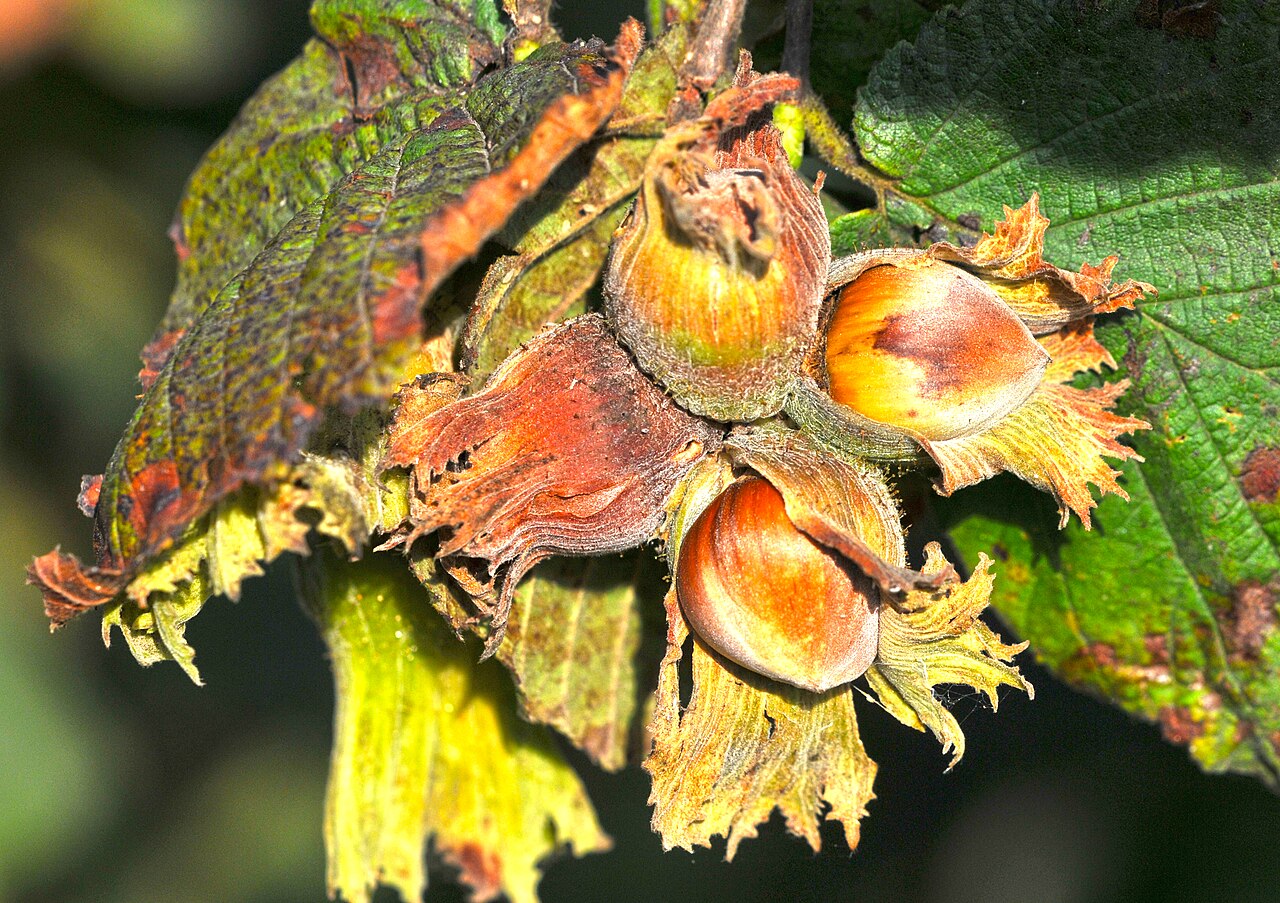
The income side is crucial for profitability, and the purchase price of hazelnuts fluctuates greatly from year to year (depending on world yield, primarily in Turkey which holds about 60% of world production).
| Period / Market | Price (in shell, unless otherwise specified) |
|---|---|
| Older Croatian calculations | ~10–14 kn/kg (~1.3–1.9 €/kg) [7] |
| Croatia, eco in shell (2021) | ~2.39 €/kg gross, ~1.99 €/kg net (after transport deduction) |
| Croatia, 2024 | ~2 €/kg |
| Croatia, 2025 | ~2–5 €/kg (up to ~5 €) |
| Turkey, minimum purchase price 2025 | ~4.2 €/kg (≈ +17% compared to 2024) |
| World kernel price (2025) | ~9.400 €/t (record high) |
The 2025 season was exceptional: due to severe spring frost and drought in Turkey and poor yield in Southeast Europe, prices jumped to record levels — paradoxically, "never less hazelnuts, and never higher price". Keep in mind that such high prices are cyclical and should not be taken as a permanent assumption in long-term business planning; for conservative calculation, it is more realistic to calculate with long-term average (e.g., 2–3 €/kg in shell), and treat high years as a bonus. Current purchase prices are best checked with buyers, cooperatives, and on TISUP (Market Price Information System in Agriculture).
When does the investment pay back?
Hazelnut begins to bear in the fourth year (first yields also in the third), and reaches full bearing around the seventh year.
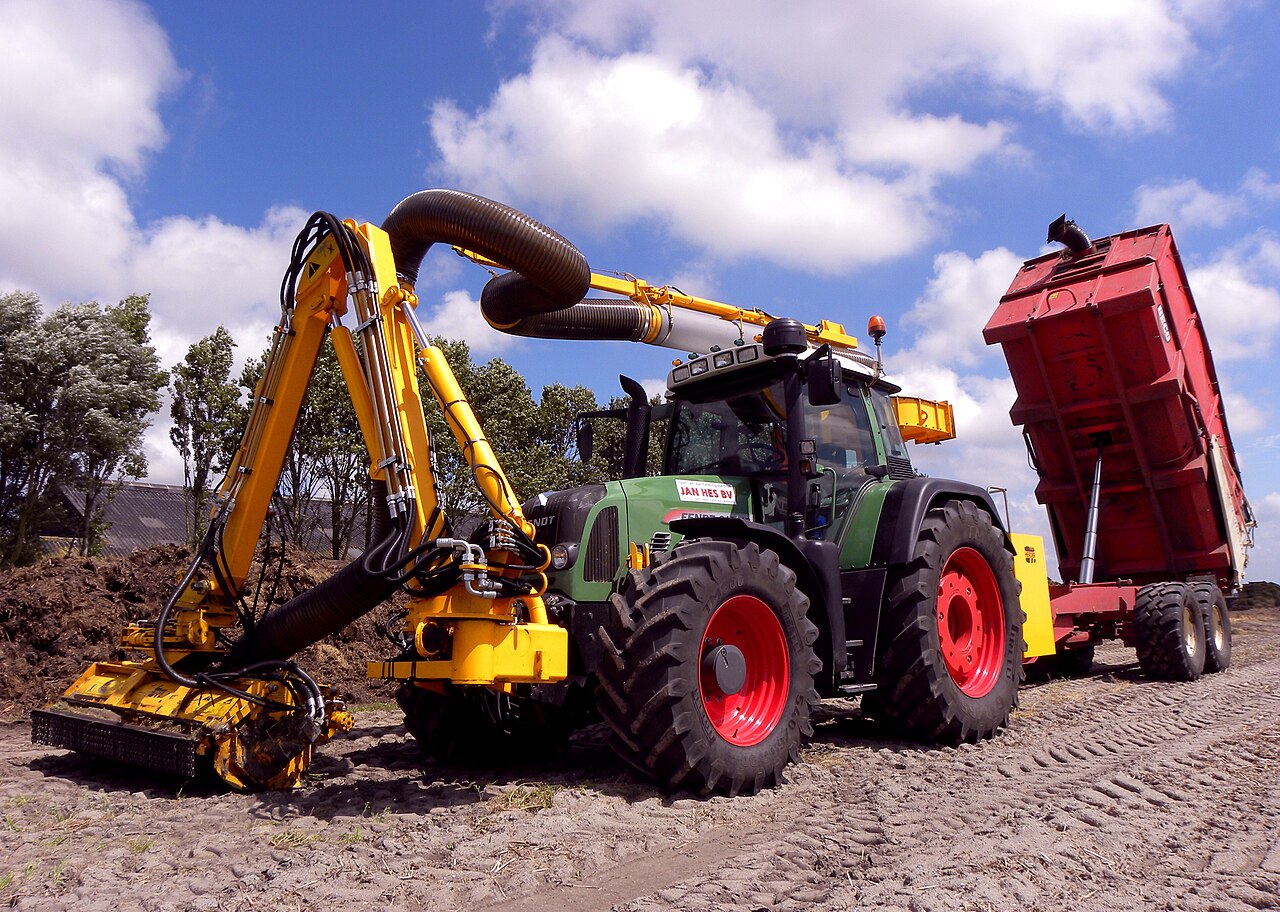
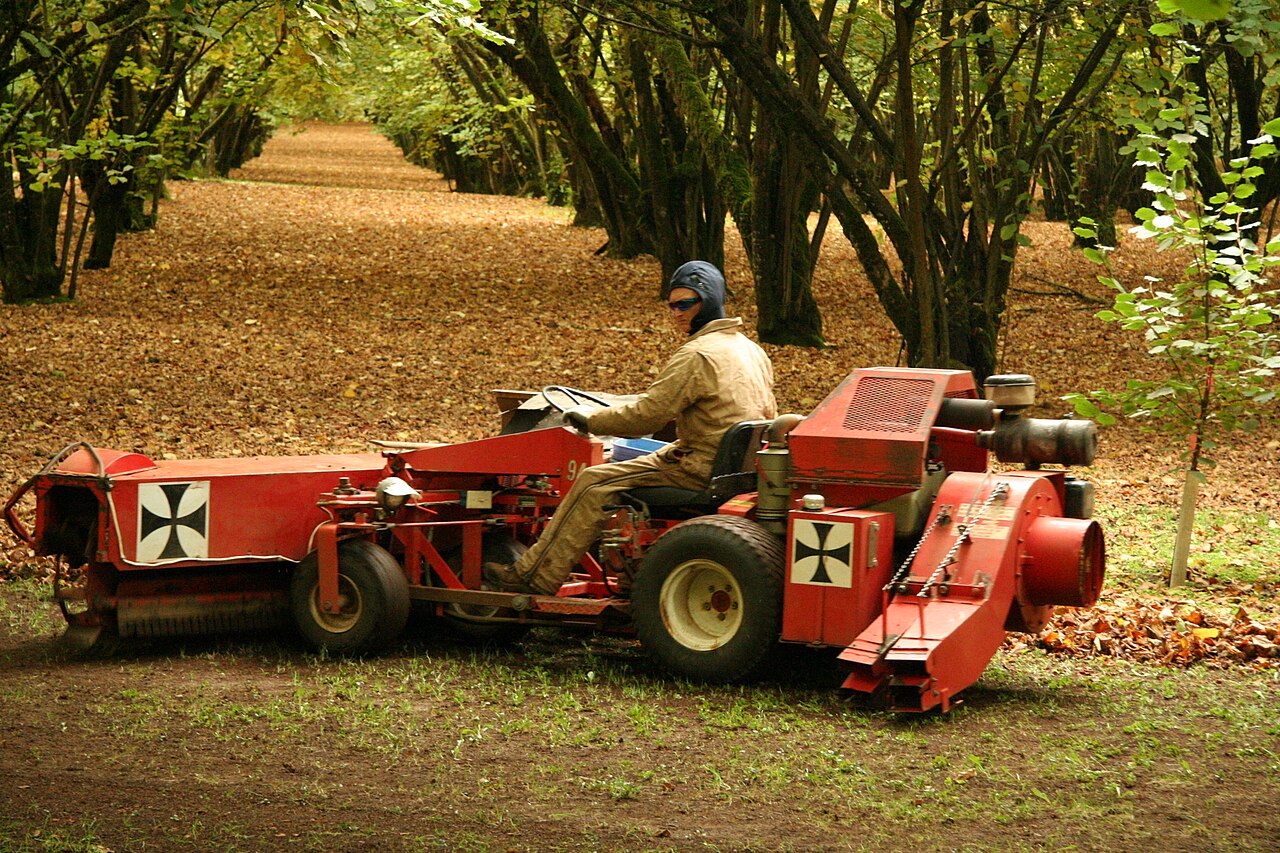
Several indicative scenarios of annual income in full bearing (1 ha, informative):
| Yield | Price (in shell) | Gross income/ha |
|---|---|---|
| 2 t/ha | 2.5 €/kg | ~5.000 € |
| 2.5 t/ha | 3.0 €/kg | ~7.500 € |
| 3 t/ha | 3.0 €/kg | ~9.000 € |
| 3 t/ha | 5.0 €/kg (exceptionally high year) | ~15.000 € |
With cautious assumptions (yield ~2 t/ha, long-term price around 2.5–3 €/kg) and classic investment without irrigation, payback is realistically in the range of about 7 to 10 years — denser layout and subsidies shorten it, and irrigation prolongs it (but reduces risk). Modern media estimates mention profits up to 5.000 €/ha with yields of 3+ t/ha. The actual result depends on variety, yield, purchase price, and weather conditions, and on whether fixed costs (depreciation, loan installments) and the value of own labor are included in the calculation.
Practical recommendations and common mistakes
- Do not underestimate the zero and first year. ~83% of investment occurs here; a poorly planned budget most often "breaks" here.
- Calculate with today's prices, not older amounts in Kuna. Seedlings, fencing, and fertilizers have become significantly more expensive; use older calculations for structure, not for absolute amount.
- Soil analysis first. Without results, you cannot correctly determine fertilization and liming, and fertilizers are the largest preparation item.
- Decide on planting density consciously. Denser layout increases seedling cost, but shortens payback — weigh cost and benefits according to variety and mechanization.
- Consider irrigation in time. Subsequent installation in an already planted orchard is more expensive and complicated, and dry and frosty years (like 2025) show how much irrigation stabilizes yield.
- Do not save on fencing. Wildlife can destroy expensive seedlings in one season; fencing protects the entire investment.
- Correctly choose pollinators (at least three compatible varieties) — mistake is not visible in the budget, but permanently reduces yield.
- Calculate also with years without income. Provide liquidity for maintenance (cultivation, protection,
Fuentes
- Ekonomska isplativost proizvodnje lješnjaka (2022)
- Poslovni plan za proizvodnju sadnica lijeske (2019)
- PODIZANJE NOVIH NASADA VOĆNJAKA (TEHNOLOŠKO-EKONOMSKE SMJERNICE) (2006)
- REPUBLIKA HRVATSKA Poljinos 27fd210a 2 (2019)
- Tehnološka i ekonomska obilježja uzgoja lijeske CORE 18f10547 (2018)
- Tehnološka i ekonomska obilježja uzgoja lijeske (2018)
- Ekonomika proizvodnje lje njaka repozi 51dcaf42 (2019)